Dr Leonidaki’s publications
Dr Leonidaki is academically active. She has published in peer-reviewed journals and written book chapters for healthcare professionals. You can view Dr Leonidaki’s publications below.
Dr Leonidaki serves on the Editorial Board for 
She recently co-edited a CBT self-help book on how to stop gambling. An overview of this book can be found here. Buy from Cambridge University Press or Amazon
Dr Leonidaki has a special interest in gambling and behavioural addiction. She gives specialist lectures on the above topic at universities throughout the UK. She has also published research papers on Psychotherapy Research, Dynamic Interpersonal Therapy, and Qualitative Research.
Books

Breaking Free: How to Stop Gambling
A self-help book on breaking free from gambling, drawing on Cognitive Behavioural Therapy (CBT) techniques. Dr Leonidaki co-edited the book and authored three chapters.

Problem gambling and conselling and treatment approaches
There is a well-recognised gender bias in the gambling literature. In chapter 13, Dr Leonidaki and colleagues summarise contemporary research and theories concerning gambling in women.

The Social and Interpersonal Origins of Depression Today
This book is a collection of articles about depression. In chapter 3, Dr Leonidaki presents qualitative findings about the active ingredients of dynamic interpersonal therapy for depression This chapter also published as an article in Psychoanalytic Psychotherapy was rated among the 5 most cited articles of the journal in the last 3 years.
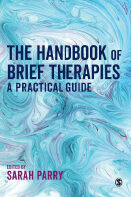
The Handbook of Brief Therapies - A Practical Guide
This book is a guide to a wide range of brief approaches used in therapeutic practice. Dr Leonidaki co-authored chapter 7, focusing on a brief description of dynamic interpersonal therapy.
Selected papers
A comparison of completion and recovery rates between first-line protocol-based Cognitive Behavioural Therapy and non-manualised Relational Therapies within a UK psychological service
This study compares completion and recovery rates between protocol-based Cognitive Behavioural Therapy (CBT), offered as a first-line therapy for common mental health problems as per national guidelines, and relational therapies (RTs), scarcely provided in the English Improving Access to Psychological Therapies (IAPT) programme.

Making space for relational therapies: Challenging the status quo in a CBT dominated environment
This article published in a professional magazine points out the need for offering more than one treatment models to clients accessing the Improving Access to Psychological Therapies (IAPT) programme.
Moving beyond a single-model philosophy: Integrating relational therapies in frontline psychological therapy in England
This paper challenges the controversial aspects of the Improving Access to Psychological Therapies (IAPT) programme and discusses the benefits of integrating a relational therapies pathway (Journal of Psychotherapy Integration).
An estranged relationship
A letter on the Improving Access to Psychological Therapies (IAPT) programme. The Psychologist.
Clients’ experiences of dynamic interpersonal therapy (DIT): Opportunities and challenges for brief, manualised psychodynamic therapy in the NHS
This is a study exploring clients’ experiences of dynamic interpersonal therapy (Psychoanalytic Psychotherapy).
Critical appraisal in the context of integrations of qualitative evidence in applied psychology: The introduction of a new appraisal tool for interview studies
This article describes a new, qualitative appraisal tool tailored to the needs of interview studies in psychology/psychotherapy (Qualitative Research in Psychology).
 For a full list of publications, visit https://www.researchgate.net/profile/Venetia-Leonidaki